Unlike Bangladesh, Kenya or Nigeria, South Africa already has serious domestic chemical manufacturing — companies like Sasol and NCP Chlorchem produce caustic soda, hydrochloric acid and sulphuric acid at scale. So the honest question a South African buyer should ask isn’t “does India supply chemicals to South Africa” — it’s “which specific chemicals are actually worth importing, and why.”
We can answer that with real numbers rather than guesswork. Looking at actual export shipment data from India to South Africa over the past year, four products stand out clearly: hydrochloric acid, poly aluminium chloride (PAC), hydrogen peroxide, and caustic soda lye. This guide is built around those four, because that’s genuinely where the demand is — not a generic list of everything we happen to sell.
Our South Africa market page covers our full product range and how to request a quote. This guide covers what buyers actually ask before placing a first order: which products make sense, what paperwork is needed, what it really costs, and how long it takes.
- Hydrochloric acid shipments from India to South Africa have grown 172% by quantity in the last year — one of the fastest-growing chemical flows between the two countries.
- Poly aluminium chloride (PAC) is the single biggest value mover, up 204% in value and 178% in quantity — driven by South Africa’s water treatment needs.
- India is already the largest single supplier of caustic soda flakes to South Africa, with around 58% of all shipments — this is a proven, working trade lane, not a new one.
- South Africa has no pre-shipment certification scheme like Kenya’s KEBS or Nigeria’s SONCAP — the real requirements are a SARS importer code, a compliant Safety Data Sheet, and correct customs classification.
- Most of our water-treatment chemicals (PAC, hydrogen peroxide, sulphuric acid, sodium sulphate) enter duty-free. Hydrochloric acid carries 10% duty and caustic soda 20% — know the difference before you quote.
- Sea transit from India to Durban is around 14-19 days — one of the shorter African routes we serve.
Which Chemicals Are Actually Growing Between India and South Africa?
South Africa’s chemical demand comes from three places: a large mining sector, a growing water-treatment need driven by ageing municipal infrastructure, and manufacturing industries like pulp, paper, soap and detergents. But because South Africa already makes a lot of its own sulphuric acid and caustic soda, the real opportunity for imports sits in specific gaps — products where local supply doesn’t fully meet demand, or where South Africa doesn’t produce a particular grade at all.
Hydrochloric acid is the standout. Shipments from India have grown 172% by quantity and 176% by value over the past year, now standing at close to 21 million kilograms. This is being pulled by mining ore processing and water treatment pH correction, areas where South African refining capacity hasn’t kept pace with demand.
Poly aluminium chloride is the biggest value story — up 204% in value and 178% in quantity. PAC is the main coagulant used to clear drinking water and wastewater, and South Africa’s well-documented municipal water challenges mean treatment plants need a steady, reliable supply of exactly this chemical.
Hydrogen peroxide is up 55% by quantity, used across water treatment and industrial bleaching applications.
Caustic soda lye remains South Africa’s largest single import line by value from India, even though volumes have eased somewhat as local production absorbs more demand — it’s still the anchor product in the relationship between our two countries, used in soap-making, pulp and paper, and general manufacturing.
| Chemical | Growth Signal | Main Use in South Africa |
|---|---|---|
| Hydrochloric Acid | +172% quantity, +176% value | Mining ore processing, water treatment pH correction |
| Poly Aluminium Chloride | +204% value, +178% quantity | Drinking water and wastewater coagulant |
| Hydrogen Peroxide | +55% quantity | Water treatment, industrial bleaching |
| Caustic Soda Lye | Largest value line from India | Soap manufacturing, pulp and paper, general processing |
We also supply Sulphuric Acid, Nitric Acid, Sodium Hypochlorite, Sodium Sulphate and Non-Ferric Alum into South Africa — all useful in water treatment and general manufacturing, and all duty-free on import. Full grades, packaging and minimum order details are on our South Africa market page.
What Paperwork Do You Actually Need?
Here’s the good news for South African buyers: compared to Kenya’s KEBS or Nigeria’s SONCAP, South Africa does not run a mandatory pre-shipment inspection scheme for basic industrial chemicals. There’s no certificate that has to be issued in India before your goods can leave. The real requirements are simpler, but still important to get right.
What You Need as the Importer to Import Industrial Chemicals into South Africa
If you’re importing regularly, or bringing goods in for resale, you’ll need a SARS importer’s code — registered through SARS eFiling. Most first-time buyers work through a South African importer or distributor who already holds this code, rather than registering as a foreign business directly.
South Africa’s Safety Data Sheet requirements are strict and specific — since September 2022, every hazardous chemical brought into South Africa needs a GHS-compliant SDS matching the South African national standard (SANS 10234), not just a generic international SDS. This is the single compliance step most first-time buyers underestimate, so we prepare South African-compliant SDS documentation for every shipment as standard.
An NRCS Letter of Authority only applies if you’re planning to repackage a chemical into small consumer containers for retail sale — for bulk industrial supply, it generally does not apply.
What We Provide with Every Shipment
What Will It Actually Cost, Landed at Durban?
This is where South Africa genuinely differs from every other market we cover — most of our range enters completely duty-free, and even the two exceptions (hydrochloric acid and caustic soda) are clearly defined rather than a blanket high rate.
| Chemical | HS Code | Duty |
|---|---|---|
| Sulphuric Acid | 2807.00 | Free |
| Nitric Acid | 2808.00 | Free |
| Sodium Hypochlorite | 2828.90 | Free |
| Sodium Sulphate | 2833.11 | Free |
| Non-Ferric Alum | 2833.22 | Free |
| Poly Aluminium Chloride | 2827.32* | Free |
| Hydrochloric Acid | 2806.10 | 10% |
| Hydrogen Peroxide | 2847.00 | 10% |
| Caustic Soda (Flakes & Lye) | 2815.11 / 2815.12 | 20% |
*PAC can be classified under a different code with a different duty rate depending on formulation — always confirm the exact code with your clearing agent.
On top of duty, all imports pay 15% VAT, calculated on the customs value plus a 10% uplift plus any duty owed. On a duty-free product like PAC or sulphuric acid, that means your landed cost is roughly CIF value plus about 16.5% for VAT alone. On hydrochloric acid at 10% duty, expect landed cost to run close to 26-27% above CIF once VAT is added on top of the duty. On caustic soda at 20% duty, landed cost runs meaningfully higher — worth checking whether an import rebate permit applies to your specific end use, since South Africa does offer duty rebates for caustic soda used in certain manufacturing processes.
Getting It There: Durban and Beyond
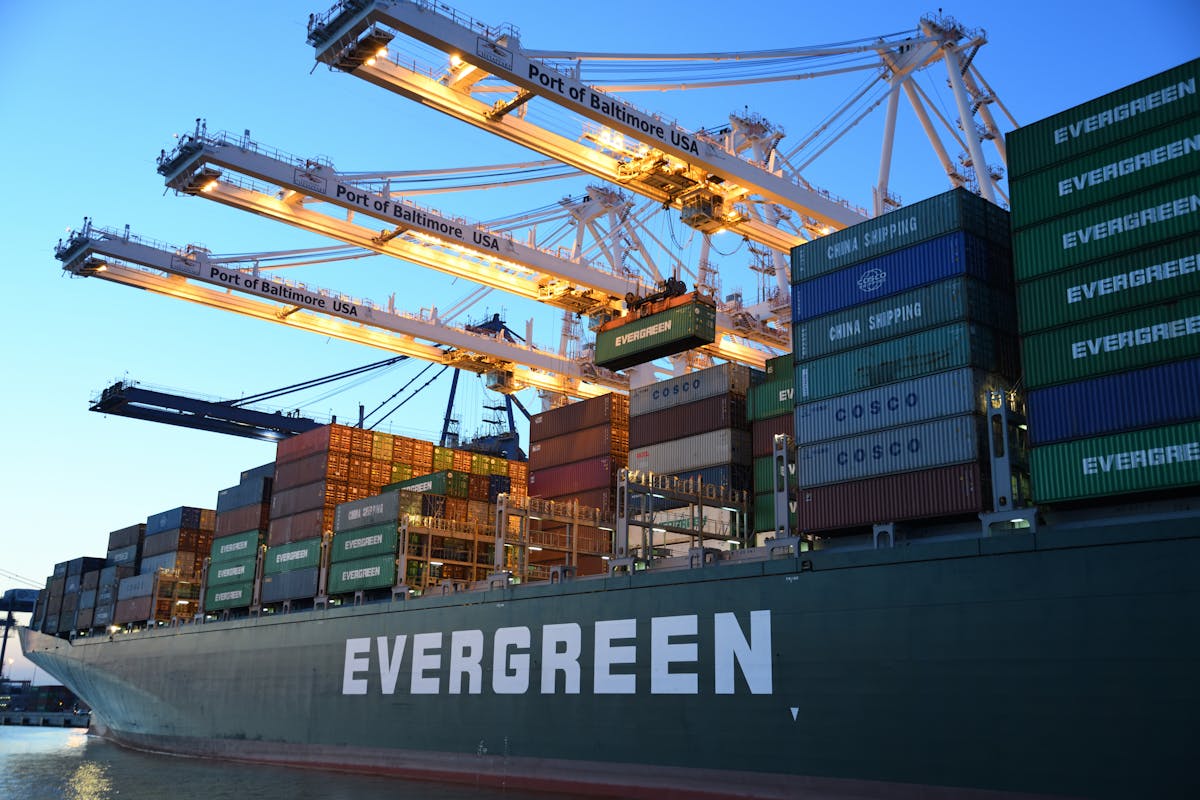
Durban is by far South Africa’s busiest port, and the natural entry point for chemical shipments from India. It’s had a difficult couple of years with congestion, but has been recovering strongly, with berth efficiency and container throughput both improving through 2025.
If Durban isn’t practical for your location, Cape Town and the deepwater Port of Ngqura near Port Elizabeth are both viable alternatives, and both have been performing strongly. South Africa also serves as the main sea gateway for landlocked neighbours — Zimbabwe, Zambia, Botswana, Lesotho and Eswatini — so if you distribute chemicals further into the region, a shipment landed at Durban is often the most practical starting point for onward road and rail transport.
Putting the full timeline together: allow time to confirm your order and packaging, around 14-19 days for sea transit (one of the shorter routes we serve, compared to East or West Africa), and a few days for port clearance. Since there’s no lengthy pre-shipment certification process required here, a realistic total for a first order is often 4-6 weeks from confirmed order to goods in hand — faster than markets requiring KEBS, NEMA or SONCAP-style approvals.
Why Buy from India Rather Than Locally, or from China?
This is a fair question in a market where Sasol and NCP Chlorchem already produce chemicals domestically. The honest answer: for commodity caustic soda or sulphuric acid at standard grades, local South African production is often genuinely competitive, and importing doesn’t always make sense once duty is added.
Where India clearly adds value is in the products where South Africa’s own capacity doesn’t fully cover demand — which is exactly why caustic soda remains South Africa’s single largest chemical import despite strong local production, and why India already holds the leading share of that specific import market. It’s also why PAC and hydrogen peroxide are growing so quickly — these are largely imported products across the board, not areas where South Africa has heavy domestic capacity to compete against.
| Factor | India | China |
|---|---|---|
| Transit to Durban | 14–19 days | Typically longer |
| Duty discount | None | None |
| Share of caustic soda flakes imports | ~58% — the leading supplier | ~20% |
| Independent lab testing | Standard with every shipment from established exporters | Varies — worth confirming with smaller suppliers |
Common Mistakes First-Time Importers Make
Assuming caustic soda always beats local pricing. With a 20% duty on top of the CIF price, imported caustic soda doesn’t automatically undercut Sasol or NCP Chlorchem on standard grades. It’s worth comparing landed cost carefully rather than assuming import is always cheaper — and checking whether an ITAC duty rebate applies to your specific manufacturing use.
Using a generic international SDS instead of a South African-compliant one. South Africa’s SANS 10234 GHS standard is specific, and a generic SDS from another market may not satisfy it. Confirm your supplier is providing South African-format documentation, not just any SDS.
Getting the PAC classification wrong. Because Poly Aluminium Chloride can sit under more than one customs code with different duty treatment, confirm the exact classification with your clearing agent before finalising pricing.
Not using a clearing agent from the first shipment. South Africa’s customs system is detailed and precise. An experienced local clearing agent who understands chemical imports specifically will save far more in avoided delays and reclassification issues than their fee costs.
Common Questions
- Confirm which of your products enter duty-free — most of our water-treatment range does.
- Make sure your supplier provides a South African-compliant (SANS 10234) Safety Data Sheet, not a generic one.
- Confirm the exact customs classification for PAC before finalising pricing.
- Use a licensed clearing agent who already understands chemical imports.
- Compare landed cost carefully against local supply for caustic soda specifically — it’s not automatically cheaper to import.