Nigeria is West Africa’s biggest market for industrial chemicals, and India is already one of its top two supply countries, second only to China. If you run a water treatment plant, an oilfield service company, or a soap and detergent factory anywhere in Nigeria, there is a very good chance the chemicals you use today already came from India — this is a proven, working trade route, not something new.
What trips people up isn’t the chemicals themselves. It’s the paperwork. Nigeria has more regulatory steps than some other African markets, and knowing which ones actually apply to you — and which don’t — is the difference between a shipment that clears in a few days and one that sits at the port for weeks.
Our Nigeria market page covers what we supply and how to request a quote. This guide covers what buyers actually ask before placing a first order: the paperwork, the real landed cost, how long everything takes, and where people usually go wrong.
- Most industrial chemicals need a SONCAP certificate arranged in India before shipping — but most do not need NAFDAC registration. NAFDAC only applies if your chemical goes into food, medicine or cosmetics.
- Every import needs a Form M opened through your bank, whether or not foreign currency is involved — this has to happen before your goods can be shipped, not after.
- India has no duty discount in Nigeria. Most of our products pay just 5% duty — one of the lowest rates in the region — though sodium hypochlorite is taxed at 10%.
- Sea transit from India to Lagos takes about 28 days. Lagos port can add further delay, so build buffer time into your planning.
- Water treatment, oil and gas, and soap and detergent manufacturing are Nigeria’s biggest sources of demand for these chemicals — textiles are not, and we won’t pretend otherwise.
- Most first-shipment delays come from paperwork started too late, not from the chemicals or the shipping line — plan your compliance steps before you plan your delivery date.
What Chemicals Does Nigeria Actually Import from India?

Three industries account for most of the demand, and it helps to know which one you’re buying for, since it affects packaging, grade and sometimes documentation.
Water treatment is the single biggest and steadiest source of demand. Nigeria’s cities are growing fast, and both government-run treatment plants and private industrial facilities rely on acids for pH correction, coagulants to clear dirty water, and disinfectants to make it safe.
Oil and gas is the second major driver. Hydrochloric acid is used to stimulate oil wells and improve flow from rock formations. Caustic soda is used in drilling fluids and to control corrosion in refining equipment. If you work in the Niger Delta oilfield services sector, these are almost certainly already part of your supply chain.
Soap, detergent and general manufacturing is the third leg, and Nigeria is one of the largest consumers of caustic soda on the entire African continent for exactly this reason — caustic soda is the basic ingredient that turns oils and fats into soap. There is also a smaller but real market in Kano’s leather tanning industry, which uses sodium sulphate and related chemicals, and industry sources there specifically point to the high cost of imported tanning chemicals as a real business problem — one that competitive, direct sourcing from India can help solve.
One honest note: Nigeria’s textile industry has shrunk dramatically over the past two decades, and today the country imports most of its textiles rather than manufacturing them. We’re not going to pretend otherwise — if you’re in textiles specifically, this may not be the strongest market fit for that use case, though our chemicals are still used across dyeing and finishing wherever local production continues.
| Chemical | Grade / Purity | Main Use in Nigeria | Other Uses |
|---|---|---|---|
| Hydrochloric Acid | 33%+ · CAS 7647-01-0 | Oil well stimulation; water treatment pH correction | Industrial cleaning, descaling |
| Sulphuric Acid | 98% or 50% · CAS 7664-93-9 | Water and effluent treatment | Fertiliser blending, metal treatment |
| Nitric Acid | 68%+ · CAS 7697-37-2 | Fertiliser production, metal etching | Electronics, explosives manufacturing |
| Hydrogen Peroxide | 50% · CAS 7722-84-1 | Water treatment, bleaching | Paper bleaching, food-grade sterilisation |
| Acetic Acid | 99.85%+ · CAS 64-19-7 | Chemical processing, dyeing | PET plastics, pharma synthesis |
| Caustic Soda Flakes / Lye | 98% flakes / 48% lye · CAS 1310-73-2 | Soap and detergent manufacturing; oilfield drilling fluids | Water treatment, alumina refining |
| Soda Ash | 99.2% · CAS 497-19-8 | Detergents, glass manufacturing | Water treatment pH correction |
| Poly Aluminium Chloride | 30% Al₂O₃ · CAS 1327-41-9 | Drinking-water and wastewater coagulant | Paper sizing |
| Sodium Hypochlorite | 12% Available Cl · CAS 7681-52-9 | Water disinfection | General sanitation |
| Sodium Bicarbonate | 99% · CAS 144-55-8 | Food, feed, industrial processing | Flue-gas treatment |
| Sodium Sulphate | 99% · CAS 7757-82-6 | Kano leather tanning; detergent filler | Glass manufacturing |
If you’d like grades, packaging options and minimum order quantities for any of these, our Nigeria market page has the full detail.
What Paperwork Do You Actually Need?
Nigeria involves more than one government body, and the biggest source of confusion for first-time importers is not knowing which one actually applies to their product. Here’s the plain breakdown.
Before Import Industrial Chemicals into Nigeria SON and SONCAP — the certificate you almost certainly need
The Standards Organisation of Nigeria (SON) runs a programme called SONCAP — the Standards Organisation of Nigeria Conformity Assessment Programme. In simple terms: before your chemicals leave India, an approved inspection company (such as SGS, Bureau Veritas, Cotecna or Intertek) has to check and certify that they meet Nigerian standards. This happens in two stages — first a Product Certificate confirming your specific product qualifies, then a SONCAP Certificate issued for each individual shipment once your order is confirmed. Nigerian customs will ask for this certificate, and a shipment that arrives without one can be held, tested at your expense, or in the worst case sent back.
If you plan to import regularly, it’s worth registering as what SON calls a “Registered” exporter rather than a one-off “Unregistered” exporter. Unregistered shipments get inspected in full every single time. Registered exporters, once approved, only get inspected on a sample of their shipments — which saves real time and cost on every order after the first.
NAFDAC — probably does NOT apply to you
NESREA — for hazardous chemicals specifically
NESREA (the National Environmental Standards and Regulations Enforcement Agency) oversees the import of hazardous chemicals from an environmental and safety standpoint. For most of SNJ Exim’s regular product range, SONCAP is the main gate you’ll go through — but if your specific chemical or grade falls outside SONCAP’s scope, a NESREA clearance permit can be used instead to support your customs clearance.
Form M and PAAR — the customs side
Every import into Nigeria — whether or not foreign currency is involved — needs a Form M, opened through your bank on the government’s trade portal. The sequence runs: you get your Product Certificate, your bank opens the Form M using that certificate plus your invoice, Nigeria Customs reviews and accepts it (usually within a day if everything’s in order), then your supplier arranges the actual SONCAP Certificate for that specific shipment. Once your goods are on the way, you apply for a PAAR — a Pre-Arrival Assessment Report — which is what customs uses to actually clear your goods when they arrive. With clean paperwork, PAAR can be issued in one to three days.
What We Provide with Every Shipment
What Will It Actually Cost, Landed at Lagos?
Nigeria’s duty rates follow a shared West African tariff system. The good news for our buyers: most of what SNJ Exim supplies falls into the lowest realistic band — just 5% duty, since these are raw industrial materials, not finished goods:
| Chemical | HS Code | Duty |
|---|---|---|
| Hydrochloric Acid | 2806.10 | 5% |
| Sulphuric Acid | 2807.00 | 5% |
| Nitric Acid | 2808.00 | 5% |
| Hydrogen Peroxide | 2847.00 | 5% |
| Acetic Acid (Glacial) | 2915.21 | 5% |
| Caustic Soda (Flakes & Lye) | 2815.11 / 2815.12 | 5% |
| Soda Ash | 2836.20 | 5% |
| Sodium Bicarbonate | 2836.30 | 5% |
| Sodium Sulphate | 2833.11 | 5% |
| Poly Aluminium Chloride | 2827.32* | 5% |
| Sodium Hypochlorite | 2828.90 | 10% |
*PAC can sometimes be classified under a different code that carries 10% duty instead of 5% — always confirm the exact classification with your clearing agent before finalising a shipment.
Duty is only the starting point. On top of it, Nigeria applies a few smaller charges, all calculated on your goods’ value: a surcharge of 7% of the duty amount, a 1% inspection fee (CISS) on the FOB value, a 0.5% regional trade levy on CIF value, and VAT at 7.5% on the running total — which means these charges compound rather than simply adding up.
Here’s a worked example on a $10,000 shipment of a 5%-duty chemical, so you can see exactly where the money goes: duty at 5% is $500. The surcharge at 7% of that duty is $35. CISS at 1% of FOB is roughly $100. The regional levy at 0.5% of CIF is $50. That brings the running total to about $10,685, and VAT at 7.5% on that figure is around $801. Your total landed cost comes to roughly $11,486 — about 15% above your original $10,000 CIF price for a 5%-duty item. Sodium hypochlorite, taxed at 10% duty, would land somewhat higher — always ask for the specific calculation for your product.
One more thing worth planning for: Nigeria’s currency, the naira, has moved a great deal against the US dollar in recent years. Your bank will help you arrange the foreign currency for your Form M and payment, but it’s worth checking current exchange rates and bank processing times before you fix your budget, rather than after.
Getting It There: Lagos, Onne and Beyond
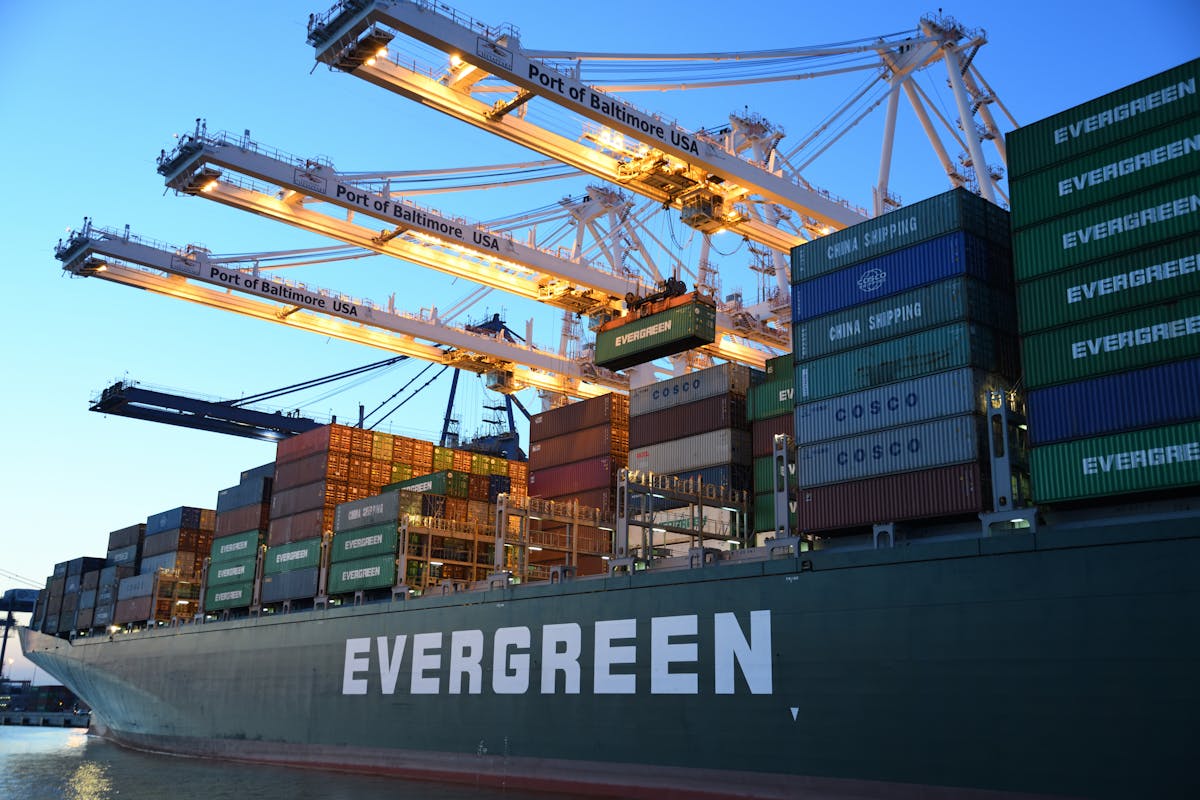
Most of Nigeria’s imports come through Lagos — specifically the Apapa and Tin Can Island port complexes, which together handle the large majority of the country’s trade by value. Both ports have been going through real improvements, including new equipment and system upgrades, but they can still experience delays compared to some other regional ports, so it’s sensible to build a few extra days into your schedule rather than plan against the fastest possible timeline.
If your business is based in or around Port Harcourt — particularly if you’re in the oil and gas sector — Onne Port in Rivers State is often a more convenient entry point than Lagos. Onne is specifically set up to handle oilfield and industrial cargo, and routing your chemical shipments there can save the extra inland transport that a Lagos entry would require for a Port Harcourt-based business.
Putting the full timeline together: allow time to finalise your order and packaging, get your SONCAP and Form M paperwork moving in parallel with production, then around 28 days for sea transit from India, plus a further few days for port clearance once your goods arrive. For a first order, a realistic total from confirmed order to goods in hand is often 6–9 weeks — after which repeat orders move faster, since your registrations and supplier relationship are already established.
Common Mistakes First-Time Importers Make
Most problems on a first shipment come down to sequencing and assumptions, not the chemicals or the shipping itself. A few patterns come up again and again:
Assuming NAFDAC is always required. As covered above, this is the single most common misunderstanding. Confirm your chemical’s end-use in writing and you’ll usually find SONCAP, not NAFDAC, is the relevant certificate for an industrial order.
Opening the Form M too late. Since the Form M has to be in place before goods can properly move, and it depends on having your Product Certificate first, starting this process only once your order is ready to ship creates an avoidable bottleneck. Start it in parallel with placing your order, not after.
Budgeting against the CIF price alone. Quoting or planning around the shipment cost alone, without adding duty, surcharge, levies and VAT, is the most common costing mistake. Always work from the fully landed figure — roughly 15% above CIF for most of our 5%-duty products — when comparing suppliers or setting your own resale prices.
Not confirming the exact HS code for Poly Aluminium Chloride. Because PAC can be classified under more than one customs code with different duty rates, confirm the specific code your clearing agent will use before you finalise pricing — it can change your landed cost meaningfully.
Not using a licensed clearing agent from the start. An experienced Nigerian clearing agent who already understands SONCAP and Form M for chemical imports specifically will save you far more in avoided delays than their fee costs — this isn’t an area to cut corners on for a first shipment.
India or China: Which Is the Better Source?
China is Nigeria’s largest single chemical supplier, with India a strong second. Since neither country gets a duty discount, the real difference comes down to reliability, documentation, and how established the trading relationship already is.
| Factor | India | China |
|---|---|---|
| Transit to Lagos | ~28 days from Nhava Sheva | Comparable, sometimes longer |
| Duty discount | None | None |
| SONCAP certification | Available via SGS, BV, Cotecna, Intertek in India | Available via equivalent agents in China |
| Independent lab testing | Standard with every shipment from established exporters | Varies — worth confirming with smaller suppliers |
| Position in Nigeria’s caustic soda imports | Strong #2 supplier | #1 supplier |
Common Questions
- Confirm your chemical’s end-use in writing so you know whether SONCAP or NAFDAC applies — for most industrial buyers, it’s SONCAP.
- Start your Form M and SONCAP paperwork as early as possible, ideally before your order is finalised.
- Use a licensed clearing agent who already understands chemical imports specifically.
- Budget the full landed cost — duty plus surcharge, levies and VAT — not just the CIF price.
- Decide whether Lagos or Onne is the better entry point for your location before you book the shipment.