Kenya is one of the more established markets for Indian industrial chemicals, and one of the easier ones to plan around once you understand how it works. India already supplies around 69% of Kenya’s caustic soda import shipments — well ahead of any other country — so this is a working, proven supply route, not a new or untested one. Buyers in Nairobi, Mombasa, Nakuru and across the country already source from Gujarat regularly, and the shipping lanes, documentation process, and customs handling are all well understood on both sides.
That said, Kenya’s import process has more moving parts than some neighbouring markets. Two separate government bodies are involved before your goods can even leave India, and a third handles clearance once they arrive. None of this is difficult once you know the sequence — but importers who don’t plan for it often lose weeks to avoidable delays, or pay penalties that a little preparation would have prevented entirely.
Our Kenya market page covers what we supply and how to request a quote. This guide covers what buyers actually ask before placing a first order: the paperwork, the real landed cost, how long everything takes, and what tends to go wrong.
- Every shipment needs a KEBS Certificate of Conformity issued in India before the ship leaves. Without it, your goods can be turned away or held for inspection with extra charges.
- NEMA registration and a permit are required for hazardous chemicals under the 2024 rules — this is separate from KEBS and needs its own paperwork.
- India has no duty discount in Kenya. You pay the full standard rate — usually 10% duty, plus other charges, landing at roughly 33% of your CIF value in total.
- Sea transit from Gujarat to Mombasa takes 14–18 days. From Mombasa, the railway reaches Nairobi in about 8 hours.
- Water treatment is the biggest source of demand — Kenya currently treats only around 11% of its wastewater properly, so this is a growing need, not a shrinking one.
- Most delays on a first shipment come from paperwork being started too late, not from the shipping itself — plan your compliance timeline before you plan your delivery date.
What Chemicals Does Kenya Actually Import from India?

Three sectors drive most of the demand, and each uses a slightly different part of the chemical range.
Water treatment is the largest and steadiest source of demand. Kenya is a water-scarce country, and today only around 11% of wastewater is treated to an adequate standard — meaning millions of people are exposed to contaminated water every year, and both national and county governments are under pressure to expand treatment capacity. Municipal treatment plants and industrial effluent facilities both rely on the same core chemicals: acids for pH correction, coagulants to clear turbid water, and disinfectants to make water safe to use.
Textile and leather processing is the second major driver. Kenya’s export garment sector, much of it built around AGOA (the African Growth and Opportunity Act, which gives Kenyan-made clothing duty-free access to the US market), consumes large volumes of bleaching and scouring chemicals during fabric preparation, and dyeing chemicals during colouring. Leather tanning, a smaller but established industry, uses many of the same inputs.
General manufacturing — soap, detergents, and various chemical processing industries — makes up the third leg. Caustic soda in particular is a basic input for soap-making, and demand here tends to be steady year-round rather than tied to any single season or export cycle.
| Chemical | Grade / Purity | Main Use in Kenya | Other Uses |
|---|---|---|---|
| Hydrochloric Acid | 33%+ · CAS 7647-01-0 | Water treatment pH correction; used in small-scale gold processing | Textile pre-treatment, descaling |
| Sulphuric Acid | 98% or 50% · CAS 7664-93-9 | Water and effluent treatment; dye fixing in textile printing | Fertiliser blending, metal treatment |
| Poly Aluminium Chloride (PAC) | 30% Al₂O₃ · CAS 1327-41-9 | The main coagulant used to clean drinking water and wastewater | Paper sizing, effluent treatment |
| Sodium Hypochlorite | 12% Available Cl · CAS 7681-52-9 | Disinfecting municipal water supplies | Textile bleaching, general sanitation |
| Hydrogen Peroxide | 50% · CAS 7722-84-1 | Bleaching in textile and leather processing | Paper bleaching, water treatment |
| Caustic Soda Flakes / Lye | 98% flakes / 48% lye · CAS 1310-73-2 | Textile processing; soap and detergent manufacturing | Water treatment, general chemical use |
If you’d like grades, packaging options and minimum order quantities for any of these, our Kenya market page has the full detail.
What Paperwork Do You Actually Need?
Two different government bodies are involved, and each has its own process, timeline, and fees. It helps to know the difference upfront, because they run in parallel rather than one after the other — starting both early is what actually saves time.
Things You Set Up Once, before Import Industrial Chemicals into Kenya
The Kenya Bureau of Standards (KEBS) runs a programme called PVoC — Pre-Export Verification of Conformity. In plain terms: before your shipment leaves India, it has to be checked and certified by an approved inspection agency such as SGS, Bureau Veritas or Intertek. This gives you a Certificate of Conformity, and Kenyan customs will ask for it at the port. Without it, your goods can be refused entry outright, or held back for a full destination inspection that carries a penalty of 15% of the shipment’s value plus a 15% bond — an expensive and entirely avoidable delay.
Separately, NEMA (the National Environment Management Authority) requires hazardous chemicals to be registered before they can be imported at all, and requires a fresh import permit for every individual shipment under rules introduced in 2024. This is additional to KEBS, not a replacement for it — think of KEBS as confirming your chemical meets Kenyan quality and safety standards, and NEMA as confirming your business is authorised to handle it environmentally. Both need to be satisfied.
In practice, the sequence looks like this: you confirm your order and packaging with your supplier, your supplier arranges the KEBS-approved inspection and testing in India, you (or your clearing agent) submit the NEMA registration and permit application in parallel, and once both are in hand, the shipment is booked and the vessel departs. Because NEMA’s process can take up to three weeks and KEBS inspection typically takes a few days once your goods and paperwork are ready, the NEMA side is usually the one to start first if this is your first shipment.
What We Provide with Every Shipment
What Will It Actually Cost, Landed at Mombasa?
Kenya charges duty based on the East African Community’s shared tariff system, which groups goods into a small number of bands depending on how “finished” a product is. Raw industrial chemicals — including everything SNJ Exim supplies — sit in the intermediate-goods band, which is taxed lower than finished consumer products:
| Chemical | HS Code | Duty |
|---|---|---|
| Hydrochloric Acid | 2806.10 | 10% |
| Sulphuric Acid | 2807.00 | 10% |
| Hydrogen Peroxide | 2847.00 | 10% |
| Caustic Soda (Flakes & Lye) | 2815.11 / 2815.12 | 10% |
| Sodium Hypochlorite | 2828.90 | 10% |
| Poly Aluminium Chloride | 2827 | 10% |
Duty is only the first of four charges applied on your CIF value (the cost of the goods plus insurance and freight). On top of the 10% duty, you’ll pay an Import Declaration Fee of 2.5%, a Railway Development Levy of 2%, and VAT at 16% — and because VAT is calculated on the CIF value plus duty plus the other two charges, the costs compound rather than simply adding up.
Here’s a worked example on a $10,000 CIF shipment, so you can see exactly where the money goes: duty at 10% is $1,000. The Import Declaration Fee at 2.5% is $250. The Railway Development Levy at 2% is $200. That brings the running total to $11,450, and VAT at 16% on that figure is $1,832. Your total landed cost comes to roughly $13,282 — about 33% above your original $10,000 CIF price. The same math scales up or down for any shipment size, so it’s worth running before you commit to a quantity, not after.
Getting It There: Mombasa and Beyond
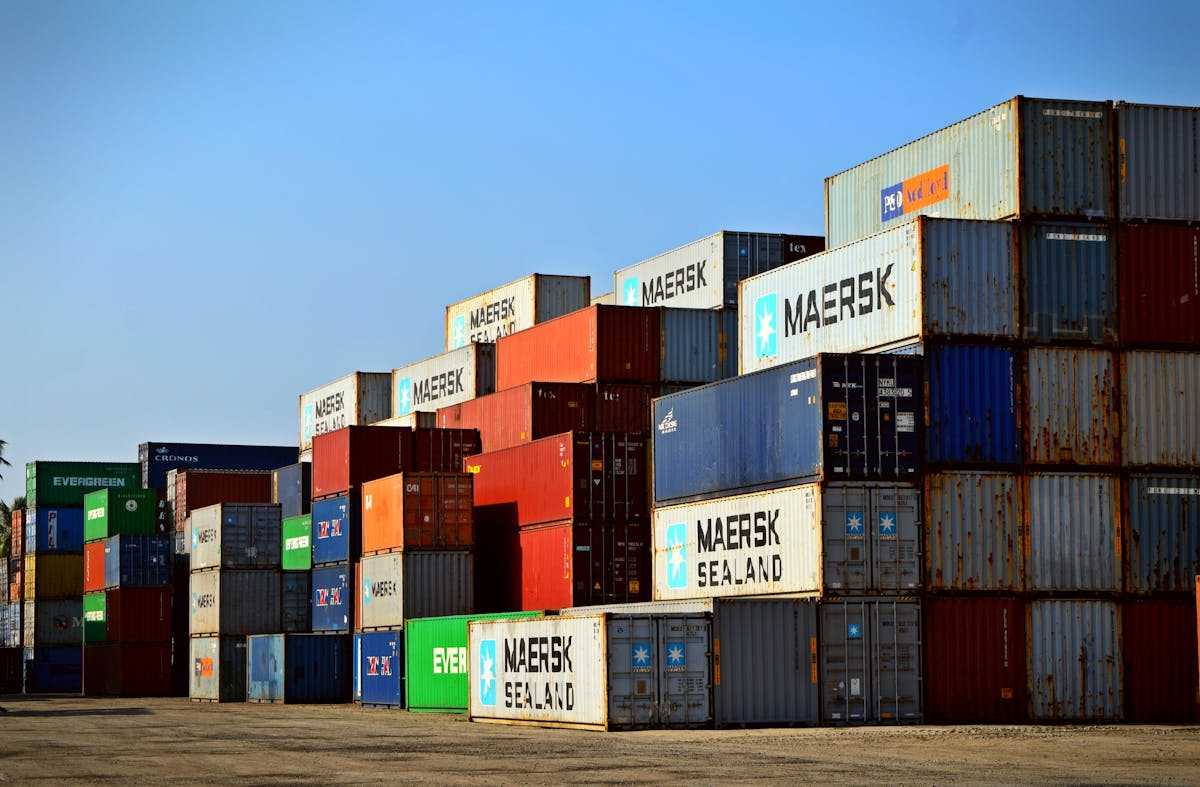
Mombasa handled over 2 million containers in 2024, and even more in 2025 — it’s East Africa’s busiest port by a wide margin, and the natural entry point whether your business is based in Kenya or you’re distributing further inland.
Once your container clears Mombasa, the Standard Gauge Railway gets it to the Nairobi Inland Container Depot in around 8 hours — considerably faster and cheaper than moving the same load by road. From Nairobi, distribution across the country by road is straightforward, and the same route continues onward for international buyers.
If you supply customers further inland — Uganda, Rwanda, South Sudan, or eastern DRC — Mombasa is usually still your best entry point rather than routing through a different port entirely. This corridor, running from Mombasa through Nairobi and on to the Kenyan-Ugandan border, is the busiest overland freight route in East Africa, and the infrastructure (rail, road, and the inland depots that handle customs and transfer) is built specifically to support exactly this kind of onward distribution.
Putting the full timeline together: allow roughly 2–3 days to finalise your order and packaging with your supplier, 3–6 weeks for KEBS and NEMA compliance on a first shipment (running in parallel with production and booking), 14–18 days for sea transit to Mombasa, and a further few days for port clearance and onward transport to your final destination. A realistic first-order timeline from confirmed order to goods in hand is therefore around 6–9 weeks — after which repeat orders move considerably faster, since your compliance groundwork is already done.
Common Mistakes First-Time Importers Make
Most problems on a first shipment aren’t caused by the chemicals, the shipping line, or even the paperwork itself — they’re caused by sequencing. A few patterns come up repeatedly:
Starting NEMA registration too late. Because NEMA’s process can take up to 21 working days, importers who wait until the goods are ready to ship before applying often find themselves with a finished order sitting in a warehouse in India, unable to move, while the permit is still being processed. Starting this application as soon as you’ve decided to import — even before your first order is finalised — avoids this entirely.
Assuming a Certificate of Origin will reduce duty. Some buyers, especially those who’ve imported from countries with trade agreements before, expect a Certificate of Origin to unlock a lower duty rate. For India-origin goods, it won’t — India has no preferential trade arrangement with Kenya, so a Certificate of Origin here is a standard customs document, not a discount.
Underestimating total landed cost. Quoting or budgeting against the CIF price alone, without the roughly 33% in duty, levies and VAT on top, is the most common costing mistake. Always work from the fully landed figure when comparing suppliers or setting your own resale prices.
Not using a licensed clearing agent from the start. This is a legal requirement in Kenya, not a convenience — and an experienced agent who already knows the KEBS and NEMA process for chemical imports specifically will save you far more in avoided delays than their fee costs.
India or China: Which Is the Better Source?
China is the main alternative source for these chemicals into Kenya. Since neither country gets a duty discount, the real difference comes down to documentation reliability, transit consistency, and how established the supply relationship already is — not price on paper.
India holds a clear lead in at least one respect that matters to buyers directly: for caustic soda specifically, India already supplies around 69% of Kenya’s import shipments, compared to roughly 7% from China. That’s not a coincidence — it reflects years of established shipping relationships, freight consolidation, and suppliers who understand Kenyan documentation requirements in detail, rather than treating them as an afterthought.
| Factor | India | China |
|---|---|---|
| Transit to Mombasa | 14–18 days | Similar, sometimes longer |
| Duty discount | None | None |
| Certificate of Conformity | Issued in about 2 working days once documents are ready | Available, similar process |
| Independent lab testing | Standard with every shipment from established exporters | Varies — worth confirming with smaller suppliers |
| Share of Kenya’s caustic soda imports | ~69% | ~7% |
Common Questions
- Check which of your products need KEBS certification, and get your inspection agency lined up early.
- Register with NEMA and apply for your import licence — allow up to 21 working days, and start this before your order is finalised.
- Use a licensed clearing agent from your very first shipment.
- Budget around 33% on top of your CIF price for duty and other charges — don’t be caught off guard at the port.
- Think about whether Mombasa is your final destination, or a gateway to customers further inland — it affects how you plan delivery.